

Moving to Ocala, FL: 2026 Guide to Life & Living
Moving to Ocala FL, Ocala Florida Relocation, Ocala Cost of Living, Ocala Real Estate, Ocala Neighborhoods, Horse Capital of the World, Living in Ocala 2026
Moving to Ocala, Florida: Everything You Need to Know About Life in the Horse Capital of the World
Thinking about moving to Ocala, Florida? Whether you are drawn by rolling horse farms, a lower-key lifestyle, or more affordable housing than many other Florida cities, Ocala in 2026 offers a compelling mix of small‑city comfort and big‑time amenities. Here’s a complete, up‑to‑date guide to help you decide if life in the “Horse Capital of the World” is right for you.
Why Consider Moving to Ocala, FL in 2026?
Ocala sits in north‑central Florida, roughly an hour from both Gainesville and Orlando. It’s known worldwide for its thoroughbred farms and equestrian culture, but that’s only part of the story. People considering an Ocala Florida relocation are often looking for:
A slower, more relaxed pace than major metros like Tampa or Orlando
Access to outdoor recreation, springs, and parks instead of just beaches
A cost of living that can be close to or below national averages, depending on lifestyle
A tight‑knit community feel with growing dining, healthcare, and retail options
With continued in‑migration and a diversifying economy, living in Ocala in 2026 feels like being in a city on the rise—without sacrificing the charm that made people fall in love with it in the first place.
Ocala as the Horse Capital of the World
Ocala proudly wears the title “Horse Capital of the World” thanks to its hundreds of thoroughbred and sport‑horse farms, limestone‑rich soil, and long history with equestrian sports. The World Equestrian Center, sprawling training facilities, and frequent shows attract riders and horse lovers from around the globe.
You don’t have to be a rider to appreciate this culture, though. Scenic drives past manicured farms, equestrian‑themed festivals, and horse‑centric neighborhoods all shape the area’s identity. For many people moving to Ocala FL, this unique atmosphere is a major part of the appeal—even if they never own a horse themselves.
Ocala Neighborhoods: Where Should You Live?
One of the biggest decisions in any Ocala Florida relocation is choosing the right neighborhood. Ocala offers everything from historic bungalows to master‑planned suburbs, equestrian estates, and 55+ communities. Here are some standout options for different lifestyles, based on 2026 neighborhood overviews.
Historic Downtown & Urban Charm
If you want walkability and character, look at Downtown Ocala and the Ocala Historic District. Brick streets, preserved early‑20th‑century homes, local boutiques, and restaurants around the square create a lively yet intimate urban core. This area is ideal for professionals, creatives, and retirees who value culture and being close to events and nightlife.
Family‑Friendly Suburbs and Growing Corridors
For families, several Ocala neighborhoods stand out:
SE Ocala & Silver Springs Shores – Mature trees, access to schools and healthcare, and proximity to Silver Springs State Park make this side of town appealing to first‑time buyers and outdoor lovers.
SW 200 Corridor, Heath Brook & Fore Ranch – A booming area with new subdivisions, shopping, and recreation centers. Fore Ranch, for example, is known for its splash park, playgrounds, and family‑oriented amenities.
Liberty Village, Calesa Township, and Marion Oaks – Growing, more affordable communities with access to schools and parks, ideal if you are budget‑conscious but still want a neighborhood feel.
Equestrian, Luxury, and 55+ Living
If you’re drawn by Ocala’s horse culture, the Northwest Equestrian District, Golden Ocala Golf & Equestrian Club, and communities like Meadow Wood Farms offer large lots, barns, and access to trails and training facilities. For luxury buyers, gated communities such as Bellechase, Carriage Hill, and Legendary Trails provide wooded settings, privacy, and custom homes.
Active adults will find several 55+ options, including On Top of the World—a massive, amenity‑rich development with golf, clubs, and fitness facilities—and Ocala Palms, which offers golf‑course living often under $500K. These communities are popular with retirees moving to Ocala for sunshine and social connection without the crowds of coastal Florida.
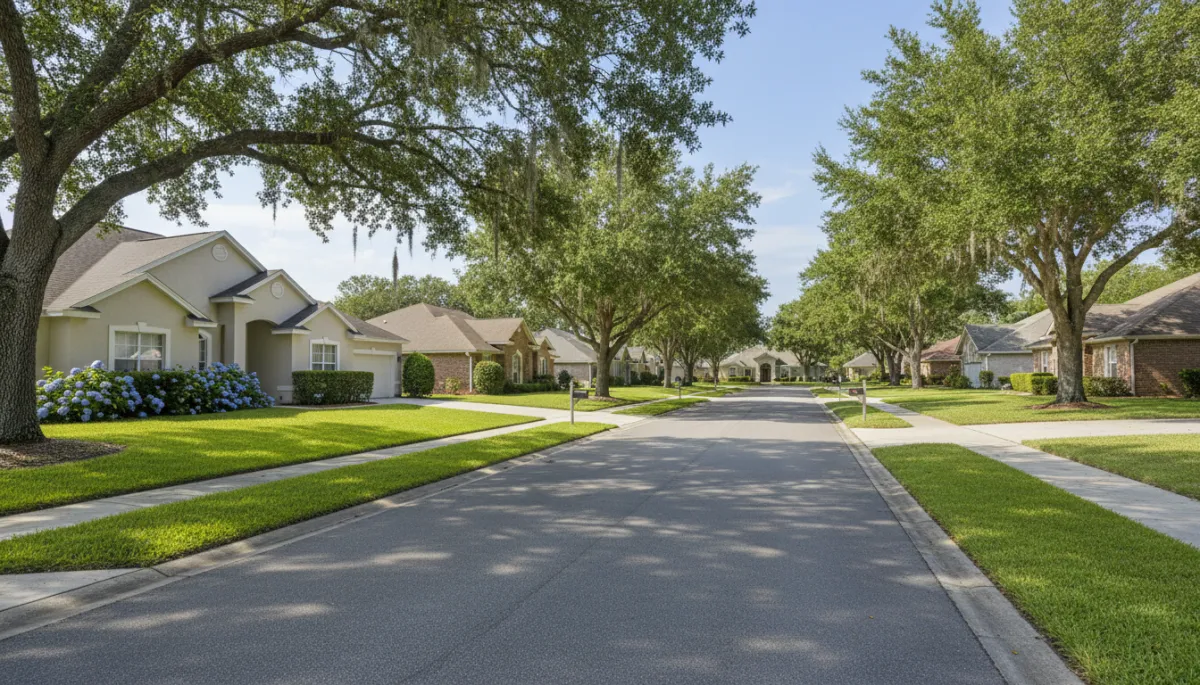
Ocala’s neighborhoods range from historic streets to modern master-planned communities.
Ocala Cost of Living in 2026: What to Expect
One of the biggest questions for anyone moving to Ocala FL is how far their money will go. The answer varies slightly by data source, but overall, Ocala remains relatively affordable compared with much of Florida and, in many cases, with the U.S. as a whole.
Salary.com estimates Ocala’s cost of living at about 1% higher than the U.S. average but a striking 64% lower than the Florida state average, with a single person spending roughly $2,493 per month and a family of four about $5,489. BestPlaces, by contrast, gives Ocala a cost‑of‑living index of 87—about 13% cheaper than the national average and 15.6% cheaper than Florida overall. Redfin’s calculator places Ocala about 12% below national averages, largely because of lower housing costs, though groceries and healthcare run a bit higher.
Looking at everyday expenses, LatestCost (2026) suggests a typical budget might include:
Rent for a 1‑bedroom: about $1,200 (range $850–$1,200)
Rent for a 2‑bedroom: about $1,500 (range $1,100–$1,500)
Groceries: around $450 per month
Transportation (gas and insurance): about $260 per month
Health insurance premiums: around $420 per month
Groceries tend to be slightly higher than national norms, while utilities and transportation often come in lower. Healthcare can run about 10% above average, according to Redfin. Overall, the Ocala cost of living is manageable for many households, but it’s important to build in room for healthcare and food costs when you plan your budget.
Ocala Real Estate Market 2026: Buyers, Sellers, and Renters
The Ocala real estate market in 2026 has cooled from its pandemic‑era frenzy and is shifting toward a more balanced environment. That’s welcome news if you’re relocating and worried about bidding wars or runaway prices.
Median home price estimates vary slightly by source:
Redfin reports a median sale price around $295,070, up about 25.6% year over year.
Zillow’s typical home value is closer to $269,000, showing a modest 3–4% decline over the past year.
Other trackers like Property Focus place the median in the $275,000 range.
Taken together, most experts peg the median Ocala home somewhere between $270K and $295K in 2026. Inventory has grown by roughly 12% year over year, and homes are staying on the market for about 90+ days on average, with nearly a quarter of listings seeing price cuts. This gives buyers more room to negotiate than just a couple of years ago.
At the same time, affordability is a mixed picture. PropertyIQ notes that the income needed to comfortably afford the median listing is about 30–35% higher than the local median household income (roughly $53,500–$58,500, depending on the source). That means newcomers from higher‑income markets may find Ocala’s prices attractive, while some local buyers still feel squeezed.
For renters, average rents fall in the $1,550–$1,620 range, according to Zillow and EfficientDollar, with two‑bedroom apartments often below national averages. New construction is active in the Gainesville–Ocala corridor, especially in master‑planned communities, with new‑build prices around $305,000 and price‑per‑square‑foot near $180.
Daily Life: What Living in Ocala in 2026 Really Feels Like
Beyond numbers and housing, what is living in Ocala 2026 actually like? In many ways, it feels like a blend of small‑town familiarity and regional hub convenience.
Commute and traffic: Most residents enjoy short commutes compared with Florida’s major metros. While key corridors can back up at rush hour, gridlock is rare by big‑city standards.
Outdoors and recreation: Silver Springs State Park, the Ocala National Forest, and numerous trails and springs make hiking, kayaking, and paddling part of everyday life for many locals.
Arts, dining, and events: A growing restaurant scene, breweries, downtown festivals, and equestrian events at the World Equestrian Center offer more to do than you might expect from a mid‑sized city.
Healthcare and services: As a regional hub, Ocala has strong medical facilities and specialty care, a key factor for retirees and families alike.
The trade‑off? If you crave big‑city nightlife or want to be on the beach every weekend, Ocala may feel quiet or a bit inland. But for many people relocating from crowded metros or expensive coastal areas, that quieter, more grounded lifestyle is exactly the point.
Tips for a Smooth Ocala Florida Relocation
If you’re serious about moving to Ocala FL, a little planning goes a long way. Consider these steps as you map out your move:
Clarify your priorities. Are you looking for acreage and horses, a walkable historic home, or a low‑maintenance 55+ villa? Your priorities will naturally narrow your neighborhood list.
Visit in different seasons. Summers are hot and humid, and afternoon storms are common. Visiting at different times of year will give you a realistic feel for the climate and pace of life.
Work with a local agent. The Ocala real estate market varies by micro‑area. A local expert can help you compare neighborhoods, understand HOA fees, and evaluate commute times and school zones.
Build a realistic budget. Factor in slightly higher grocery and healthcare costs, plus homeowner’s insurance, property taxes, and potential HOA dues. Use up‑to‑date calculators from sites like Salary.com, Redfin, and RentCafe for a tailored snapshot.
Plan your work situation. If you’re remote, check internet options in your preferred neighborhood. If you’ll commute, map out your route at typical rush‑hour times.
Is Moving to Ocala Right for You?
In 2026, Ocala stands out as a city that still offers value and breathing room in a state known for rapid growth and rising prices. Its identity as the Horse Capital of the World adds character you won’t find in typical suburbs, while diverse Ocala neighborhoods make it possible to find a home that fits almost any stage of life—from first‑time buyers and young families to equestrian professionals and retirees.
The Ocala cost of living hovers around national norms, sometimes below, depending on which numbers you use, with housing that is generally more attainable than in many Florida hotspots. The Ocala real estate market is stabilizing, giving buyers more options and negotiating power than in recent years, though incomes still trail state and national medians.
If you’re looking for a place where you can trade congestion and sky‑high housing costs for oak‑shaded streets, horse farms, and spring‑fed rivers—while still enjoying modern amenities—then living in Ocala in 2026 may be exactly the fresh start you’re after. Take time to explore, run the numbers, and talk with locals. You may find that the Horse Capital of the World feels a lot like home.
Thinking about making the move to Ocala?
Thinking about making the move to Ocala? Reading about neighborhoods and cost of living is a great first step, but nothing replaces having a real conversation with someone who knows this market from the inside out. Whether you are just starting to explore your options or you are ready to start touring homes, Alexis Rodriguez Cintron with eXp Realty is here to help you navigate every step of the process.
From comparing neighborhoods and understanding current home prices to finding the right community for your lifestyle and budget, Alexis brings local knowledge and personalized service to every client. If you are relocating from out of state, he can even help you get a feel for different areas before you ever set foot in Ocala.
Ready to take the next step? Contact Alexis Rodriguez Cintron with eXp Realty today and let's find the right place in Ocala for you.
Frequently Asked Questions About Moving to Ocala, Florida
1. How long does it take to settle into life in Ocala after relocating?
Most people who move to Ocala find that it does not take long to feel at home. The community has a welcoming, small-city feel and there are plenty of ways to get plugged in quickly — whether through a 55+ community, a neighborhood HOA, local events downtown, or equestrian activities. Having a local real estate agent like Alexis Rodriguez Cintron help you land in the right neighborhood from the start makes a big difference in how quickly you feel connected.
2. Is Ocala a good place to relocate for remote workers?
Yes, Ocala has become increasingly popular with remote workers. The lower cost of living compared to many Florida metros, access to nature, and a quieter pace of life make it an attractive option for people who are no longer tied to a specific office. Internet infrastructure has improved in many parts of the city and surrounding communities, though it is always smart to verify service availability in your specific neighborhood before committing to a home purchase.
3. What should I know about homeowner's insurance when buying in Ocala?
Homeowner's insurance in Florida has been a hot topic in recent years, and Ocala is not exempt from rising premiums. Because Ocala is inland, it generally faces lower wind and flood risk than coastal areas, which can help with rates. However, you should still budget carefully and shop multiple carriers. The age, construction type, and roof condition of a home all play a role in what you will pay. A local agent like Alexis can connect you with trusted insurance contacts who know the Ocala market well.
4. How does Ocala compare to The Villages for retirees?
Both are popular retirement destinations in the same general region of Florida, but they offer very different experiences. The Villages is a massive, self-contained 55+ community with its own town squares, golf cart paths, and entertainment districts — it is essentially a city built around retirement living. Ocala offers more variety, with options ranging from active adult communities like On Top of the World to mixed-age neighborhoods, horse properties, and historic homes. If you want a structured, amenity-rich retirement community, The Villages may appeal to you. If you prefer more flexibility and a broader community feel, Ocala is worth a close look. Alexis can help you compare both options based on your lifestyle and budget.
5. What is the process for buying a home in Ocala if I am relocating from out of state?
Buying a home from out of state is very common in Ocala, and a good local agent makes the process much smoother. Typically you will want to start with a pre-approval from a lender, then work with your agent to identify neighborhoods and homes that match your criteria. Virtual tours, video walkthroughs, and detailed market reports can help you narrow things down before you visit in person. Many out-of-state buyers make one focused trip to tour their top picks and make a decision. Alexis Rodriguez Cintron with eXp Realty has experience working with relocating buyers and can help you structure the process so nothing falls through the cracks.